🧵 Textile Industry Biomass Energy Case
Biomass Gasification Co-Generation System for Small Textile Factory (China Project)
🧠 Key Results Snapshot
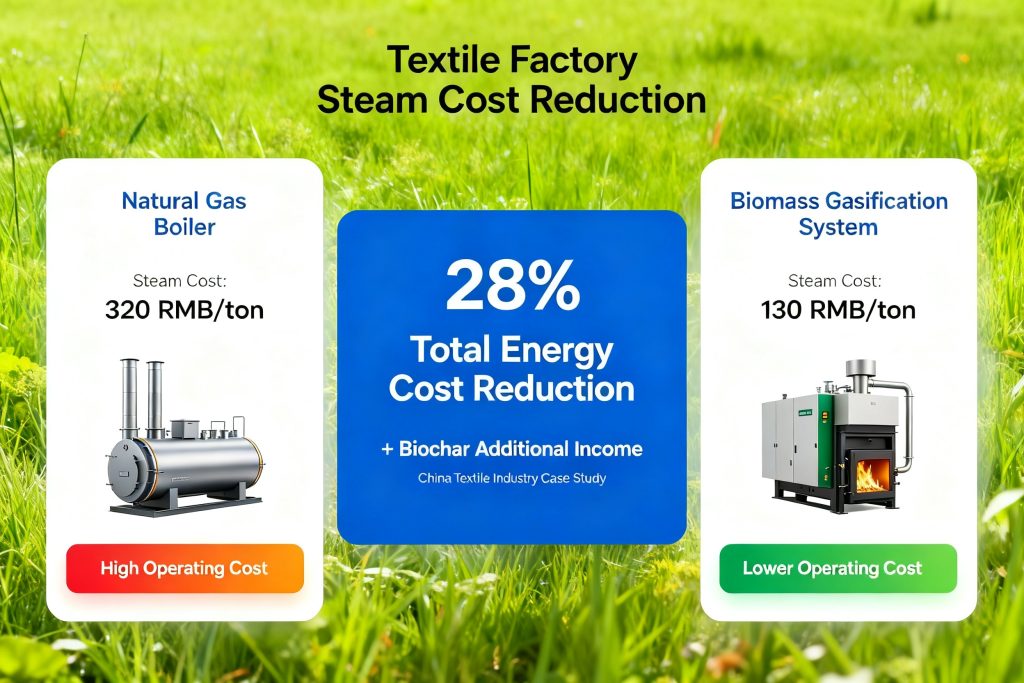
- Energy cost reduction: 28%
- Annual fuel savings: ~210,000 RMB
- Additional by-product income (biochar): 84,000 RMB/year
- Total economic benefit: ~294,000 RMB/year
- Suitable capacity: 3 textile production lines (4–6 ton steam system)
- Stable operation at 1.2 MPa steam pressure
👉 A small-scale biomass gasification system designed for textile factories under 10-ton steam demand.
🧠 Executive Summary
A textile factory in Jiangxi, China operating multiple production lines required stable steam at 1.2MPa for dyeing, drying, and production heating processes.
The factory previously relied on fossil fuel-based steam supply, resulting in increasing operating costs and unstable long-term energy budgeting.
To reduce fuel cost and improve energy independence, the factory implemented a small-scale biomass gasification co-generation system, combining steam production with biochar by-product utilization.
⚠️ Key Challenges Before Project
Before implementation, the factory faced:
- Rising fossil fuel cost affecting production margin
- Need for stable steam supply for continuous textile operation
- Limited investment budget for large-scale system upgrade
- Requirement for small-scale solution (4–6 ton steam level)
- Desire to improve energy efficiency without production disruption
👉 The main issue was not steam availability — but long-term cost control for small/medium textile production.
👉 Learn how biomass gasification reduces industrial steam cost
⚙️ Biomass Energy Solution
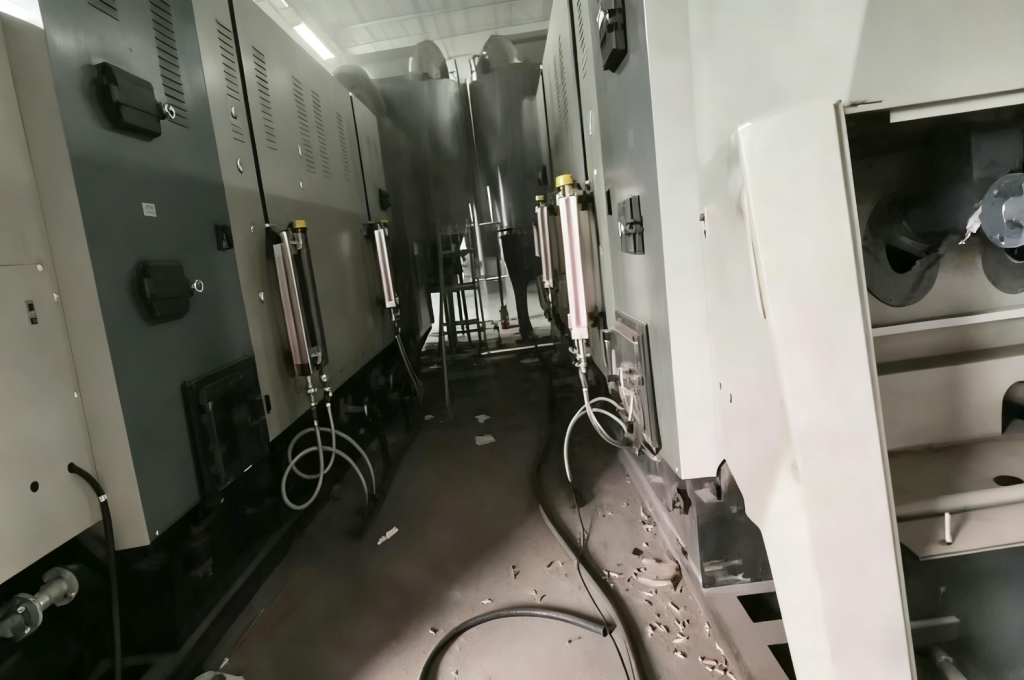
After technical evaluation, a small fixed-bed biomass gasification system + steam boiler hybrid system was selected.
🔧 System Configuration
- Small-scale biomass gasification furnace (fixed-bed type)
- Steam boiler system (1.2MPa operation pressure)
- Designed for 3 textile production lines
- Integrated gas + steam co-generation structure
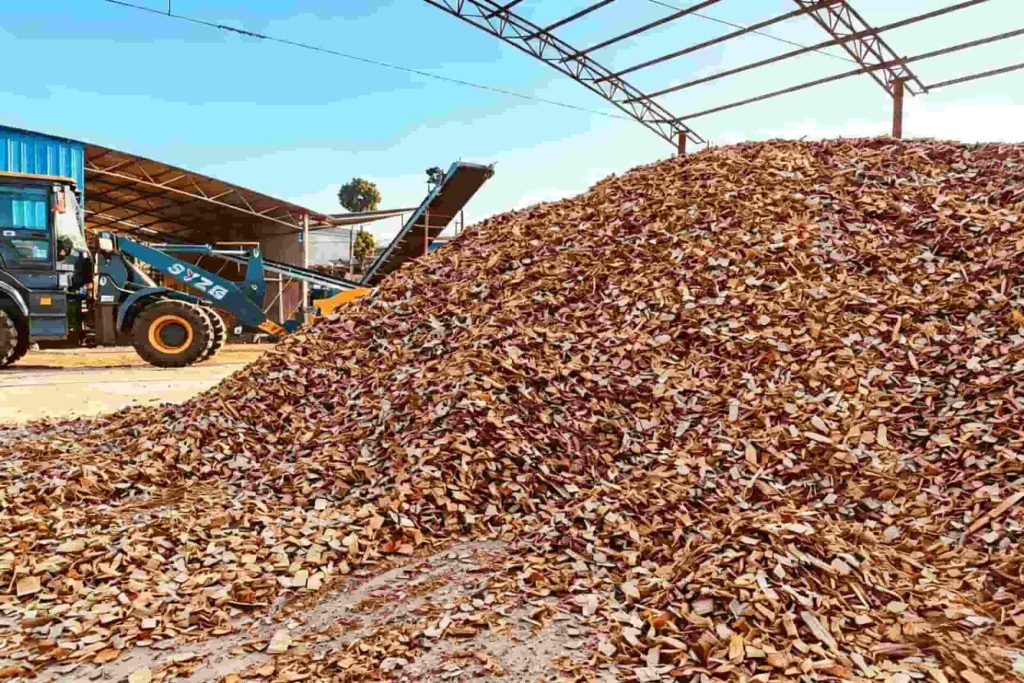
🌿 Fuel Used
- Local wood chips
- Sawdust / wood residues
📊 Project Performance (Real Data)
- Annual biomass fuel consumption: 840 tons
- Annual natural gas savings: ~210,000 RMB
- Biochar by-product income: ~84,000 RMB/year
- Total energy cost reduction: 28%
- Stable steam output for textile production lines
👉 The system not only reduced cost, but also created an additional revenue stream.
💰 Financial Impact
- Total annual benefit: ~294,000 RMB
- Payback period: fast ROI (small system investment)
- Low operational complexity compared to full boiler replacement
🧠 Engineering Highlights
- Small-scale gasification system optimized for textile loads
- Stable 1.2MPa steam output for dyeing and drying processes
- Dual output design: steam + biochar
- Suitable for small and medium textile factories
- Low CAPEX, fast installation, simple operation
- Flexible biomass fuel usage (wood chips, sawdust)
🌍 Why This Case Matters for Textile Industry
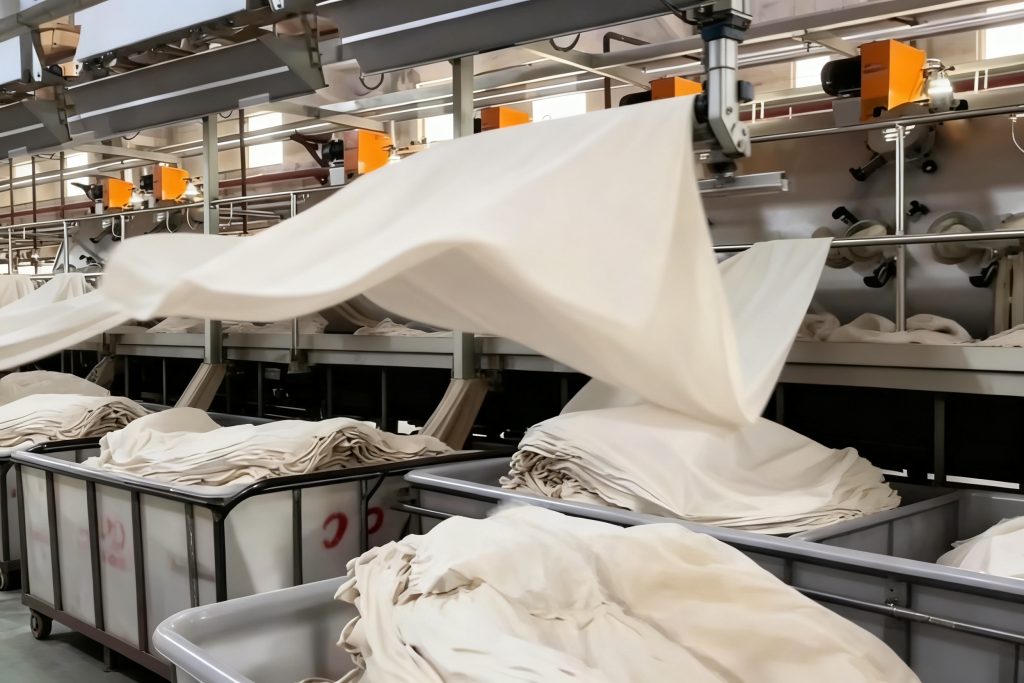
Textile production requires continuous steam for:
- Dyeing processes
- Fabric drying
- Heat setting
- Washing and finishing lines
👉 This case proves that even small textile factories (4–6 ton systems) can:
- Reduce energy cost without large investment
- Generate additional income from waste
- Improve energy independence
- Maintain stable production steam supply
⚖️ Why Biomass Gasification (Not Full Boiler Replacement)
❌ Full replacement:
- High investment cost
- Longer installation time
- Higher operational risk
✅ This solution:
- Small-scale system
- Fast installation
- Dual income (energy + biochar)
- Low risk, fast ROI
📞 CTA Section
Check If Your Textile Factory Can Reduce Energy Cost by 20–30%
View more industrial biomass energy case studies.