🔹 1. Introduction
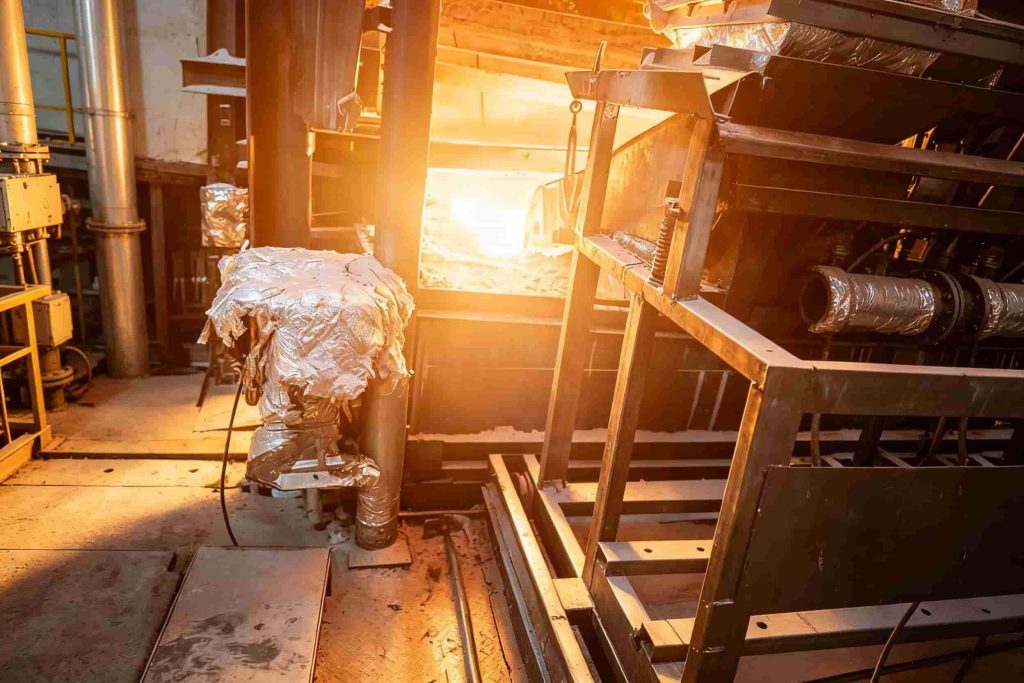
Energy cost has become one of the biggest challenges for the glass industry.
Many glass factories rely on natural gas for furnace heating. However, in recent years, rising gas prices and unstable supply have significantly reduced profitability.
As a result, more manufacturers are comparing natural gas vs biomass to find a more sustainable and cost-effective solution.
🔹 2. Why Fuel Cost Matters in Glass Manufacturing
Glass production requires continuous high-temperature heating, often 24/7.
This means fuel cost directly affects:
Production cost per ton
Factory profit margins
Long-term competitiveness
Pricing flexibility in export markets
In many factories, energy cost accounts for 30%–50% of total operating cost.
🔹 3. Natural Gas vs Biomass: Cost Comparison
Typical comparison for industrial furnace heating:
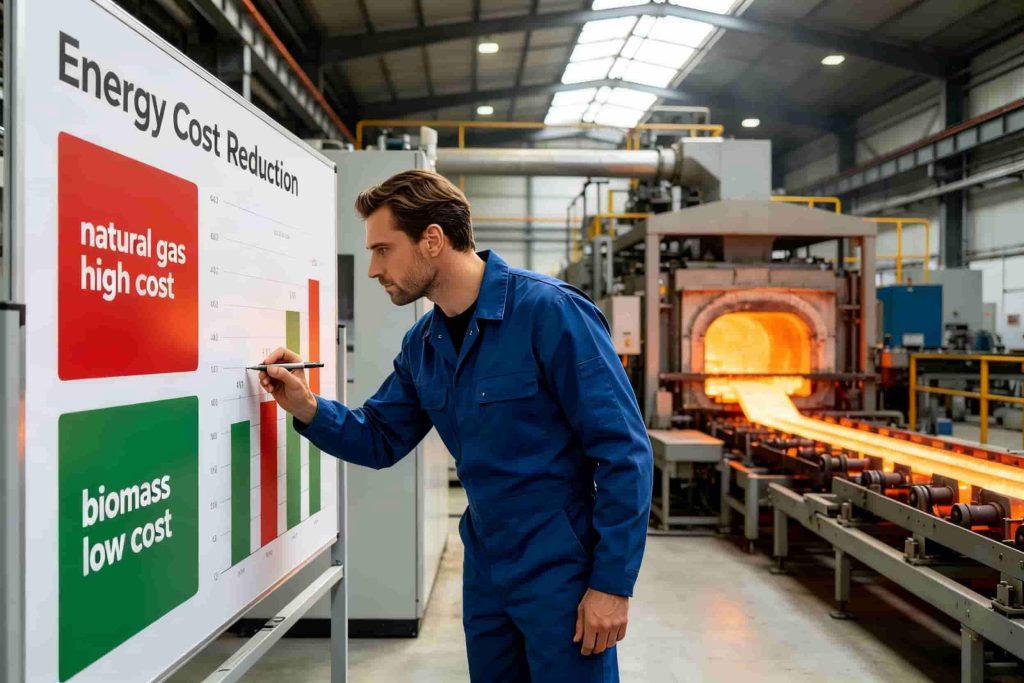
Fuel Type Cost Level Price Stability Supply Risk
Natural Gas High Low Medium
Biomass Fuel Low–Medium High Low
In many markets, biomass fuel can reduce heating cost by 30%–50% compared with natural gas.
This creates a major advantage for glass factories operating under thin profit margins.
🔹 4. Why Biomass Is Becoming a Better Choice
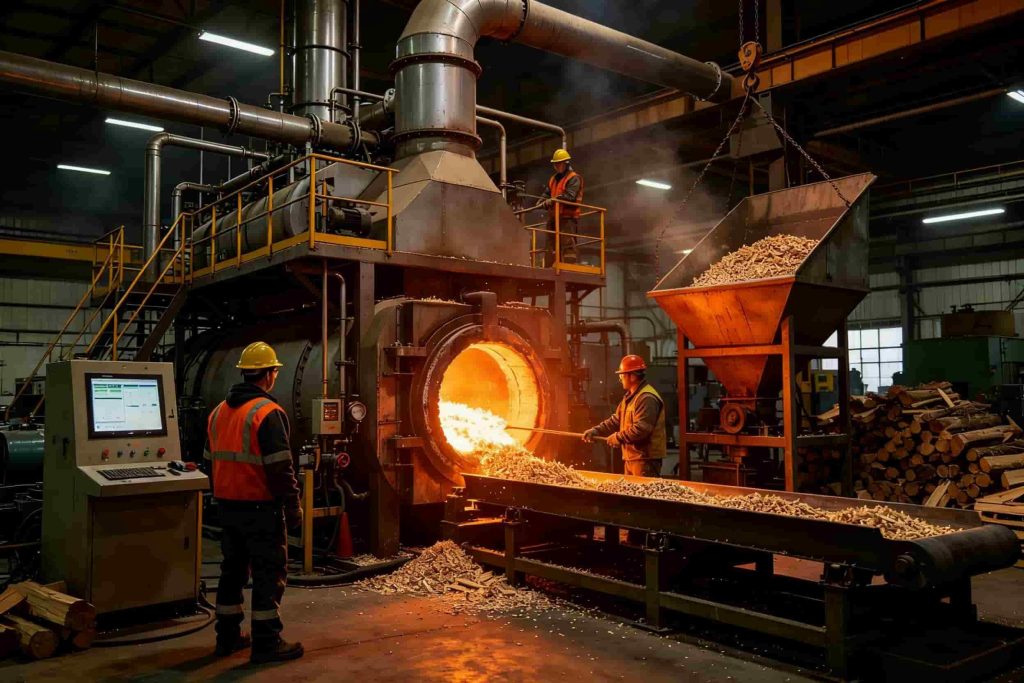
Biomass fuels such as:
wood chips
rice husk
biomass pellets
can be converted into clean syngas through a gasification system and used for industrial furnaces.
Main advantages:
Lower fuel cost
More stable pricing
Local fuel availability
Reduced dependence on imported gas
Better long-term budgeting
👉 Learn more about Biomass Gasification systems for industrial furnaces.
🔹 5. Real Example in Glass Industry
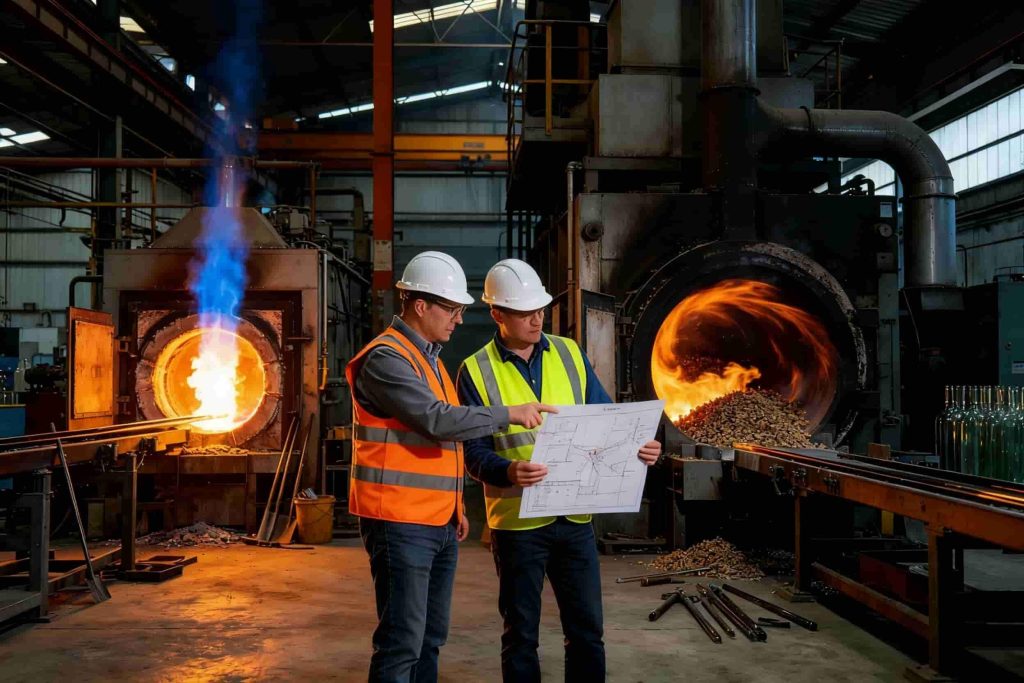
A glass bead factory replaced natural gas with a biomass gasifier system.
Results included:
Stable furnace temperature above 1390°C
Continuous production
Significant fuel cost reduction
Improved profitability
👉 Read our Glass Industry Case Study.
Explore our Glass Industry biomass energy solutions for glass furnaces and kilns
🔹 6. When Boiler Retrofit Is a Smart Option
Some existing furnaces or boilers do not need full replacement.
They can often be upgraded through targeted burner or fuel system modification.
👉 Explore Boiler Retrofit solutions for energy cost reduction.
Discover Boiler Retrofit solutions to reduce natural gas costs without full equipment replacement.
🔹 7. Conclusion
For glass manufacturers facing rising fuel prices, comparing natural gas vs biomass is no longer optional — it is a business decision.
Factories that switch earlier often gain:
Lower operating cost
Better pricing competitiveness
Higher profit stability
Biomass energy is becoming a practical path for the future of glass manufacturing.
See more Industrial Heating solutions for continuous high-temperature manufacturing processes.
🔹 Frequently Asked Questions
- Is biomass cheaper than natural gas for glass factories?
In many regions, biomass fuel can reduce heating costs by 30%–50% compared with natural gas, depending on local fuel prices and furnace efficiency.
- Can biomass reach the high temperature required for glass furnaces?
Yes. Properly designed biomass gasification systems can provide stable high-temperature heat suitable for many glass industry applications.
- Does a factory need to replace the whole furnace?
Not always. Some factories can reduce costs through Boiler Retrofit solutions without replacing the full system.
- What biomass fuels can be used?
Common fuels include wood chips, rice husk, biomass pellets, coconut shell, and other agricultural residues, depending on local availability.
- Is biomass more environmentally friendly than natural gas?
Biomass is generally considered a renewable energy source and can help reduce dependence on fossil fuels when sustainably sourced.
📞 Contact Us
Looking for a cost reduction plan for your glass factory?
👉 WhatsApp: https://wa.me/8613630031399
👉 Email: postmaster@yitongnf.cn