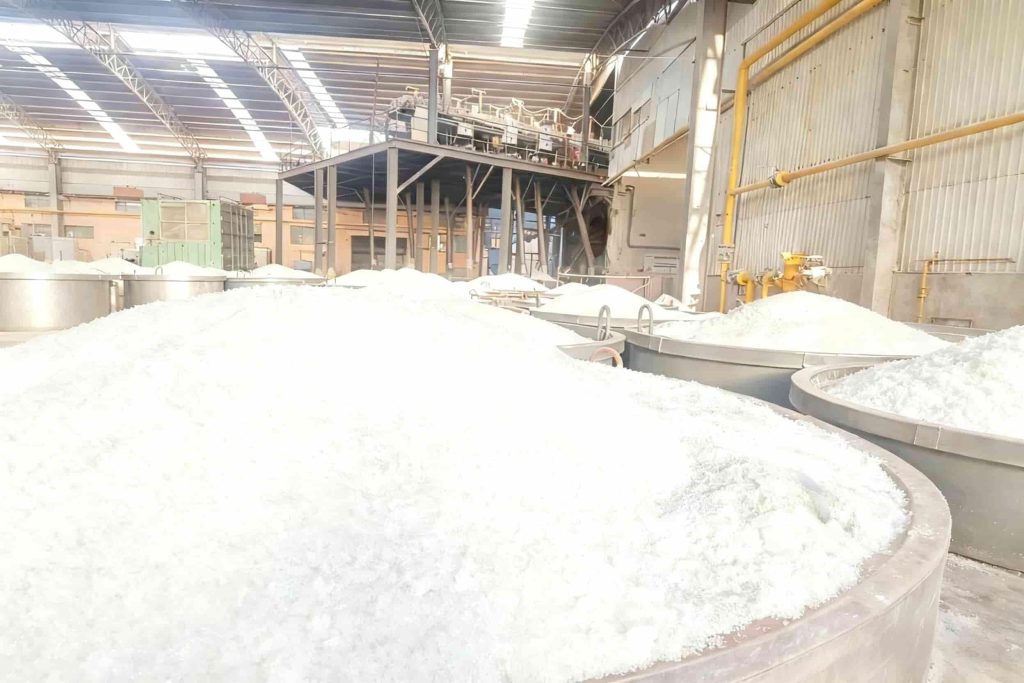
🔹 1. Industry Background: Rising Energy Pressure in Glass Industry
In recent years, the glass bead manufacturing industry has been facing increasing pressure from:
Rising natural gas prices
Intense product price competition
High energy consumption in high-temperature furnaces
Shrinking profit margins
In many factories, energy cost accounts for:
30%–50% of total production cost
As a result, many glass manufacturers are now seeking natural gas replacement solutions.
🔹 2. Why Natural Gas Is No Longer Sustainable
For glass bead production, continuous high-temperature operation is required.
However, natural gas systems face:
High and unstable pricing
Low profit margin under market competition
Dependency on fossil fuel supply chains
👉 In many cases, factories are experiencing a situation where:
Production is running, but profit is disappearing.
Existing boilers can often be upgraded using our Boiler Retrofit solutions without full replacement.
🔹 3. Biomass Gasifier Solution for Glass Industry
A biomass gasification system provides a practical alternative to natural gas for glass furnaces.
✔ Working Principle
Biomass materials such as:
Wood chips
Rice husk
Biomass pellets
are converted into combustible gas under oxygen-limited conditions.
Main gas components:
CO (Carbon Monoxide)
H₂ (Hydrogen)
CH₄ (Methane)
This syngas is then used for stable furnace combustion.
👉Learn more about our Biomass Gasification systems designed for industrial fuel conversion applications.
🔹 4. Real Project Case: Glass Bead Factory Retrofit
A domestic glass bead manufacturer recently completed a successful energy transition:
Project Overview
Original fuel: Natural gas
New system: Biomass gasifier + combustion system
Furnace temperature: 1390°C stable operation
Production: 60 tons/day
System Status
Stable gas supply
Continuous furnace operation
No production interruption
🔹 5. Key Result: Significant Cost Reduction
After retrofit, energy cost dropped significantly:
Approx. RMB 300 per ton of product
Comparison:
Energy Type Cost Stability Price Level
Natural Gas Unstable High
Biomass Gas Stable Lower
Business Impact:
Reduced production cost per ton
Restored factory profitability
Improved cost predictability
Maintained production stability
🔹 6. Suitable Applications in Glass Industry
This solution is suitable for:
Glass bead manufacturing
Glass melting furnaces
High-temperature kiln systems
Water glass production
Industrial heating furnaces
👉Explore Industrial Heating solutions for different manufacturing processes such as drying, melting, and furnace heating.
🔹 7. Why Biomass Gasification Works for High-Temperature Furnaces
Key advantages:
Stable high-temperature combustion
Continuous gas supply capability
Flexible fuel sources (biomass waste)
Lower and more predictable fuel cost
Suitable for long-hour industrial operation
🔹 8. Industry Trend: Cost-Driven Energy Transition
In industrial sectors, energy transformation is no longer driven only by environmental policy, but mainly by:
👉 Cost pressure and profit survival
More factories are shifting from:
Natural gas → Biomass gasification
Coal → Clean biomass energy
Learn more about Glass Industry biomass energy solutions for industrial furnaces based on real project applications.
🔹 9. Conclusion: From High Cost to Controlled Profitability
This case demonstrates a clear trend:
Continuing natural gas usage → shrinking margins
Biomass gasification adoption → cost control + profit recovery
For glass bead manufacturers, energy transformation is becoming a key factor for survival and competitiveness.
❓ Frequently Asked Questions (FAQ)
1.Can biomass gasifiers replace natural gas in glass furnaces?
Yes. With proper system design, biomass syngas can fully replace natural gas in industrial furnaces.
2.Will furnace temperature remain stable?
Yes. Industrial systems can maintain stable high-temperature operation (1300°C+).
3.What fuels can be used?
Wood chips, rice husk, biomass pellets, and agricultural waste.
4.How much can energy cost be reduced?
Typically 30%–50% depending on fuel price and system design.
We provide customized biomass energy solutions for industrial furnace applications.
WhatsApp: https://wa.me/8613630031399
Email: postmaster@yitongnf.cn