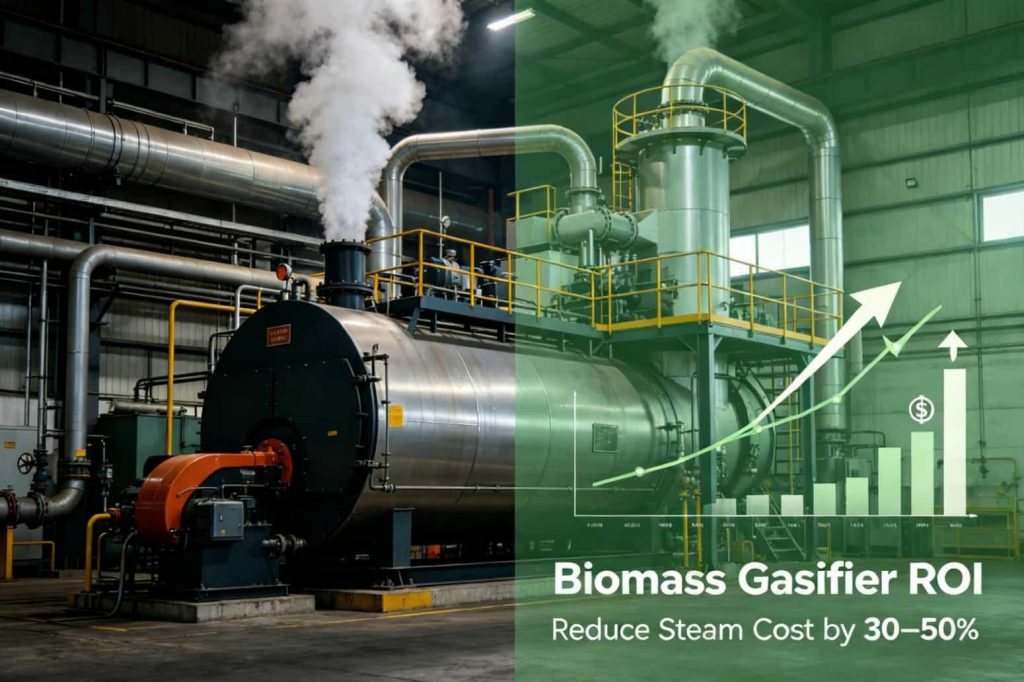
For most factory owners, switching to biomass is not just about sustainability — it’s about reducing fuel cost and improving profitability.
But one key question always comes first:
👉 What is the ROI of a biomass gasifier system?
Without a clear return calculation, it is difficult to justify investment in a boiler retrofit or gasification system.
With the global energy transition and rising pressure on carbon footprint reduction, biomass gasification is becoming both a financial and strategic decision.
Understanding ROI helps you:
* Estimate fuel savings
* Evaluate project feasibility
* Make faster investment decisions
Common Problems
Factories evaluating biomass gasification often face:
* Unclear fuel cost comparison (LNG vs biomass)
* Difficulty estimating steam production cost
* Uncertainty about payback period
* Hidden costs (maintenance, tar treatment, downtime)
* Overestimated ROI from suppliers
Why ROI Calculation Is Often Incorrect
Many ROI calculations fail because they ignore real operating conditions.
1. Ignoring Biomass-to-Steam Efficiency
Different systems produce different outputs
👉 Example:
* High-temp gasifier: 4.0–4.3 t steam / ton fuel
* Low-temp system: ~3.5 t steam
2. Not Considering Tar-Related Costs
Low-temperature systems increase:
* Maintenance cost
* Downtime
* Effluent treatment plant (ETP) cost
3. Using Unrealistic Fuel Prices
Fuel cost varies by region:
* Rice husk (Southeast Asia)
* Wood waste
* Biomass pellets
4. Ignoring System Stability
Unstable systems reduce actual savings
How to Calculate Biomass Gasifier ROI
A practical ROI calculation includes 4 key steps:
Step 1: Calculate Current Steam Cost
👉 Example (LNG system):
* Fuel cost: $12 / MMBTU
* Steam production cost: ~$25–30 per ton
📊 Fuel Comparison Table for SE Asia Factories
| Fuel Type | Cost Level | Risk | Notes |
|---|---|---|---|
| LNG / Diesel | High | Price volatility | High OPEX |
| Biomass (Rice Husk / Wood Waste) | Low | Stable | Local supply, strong ROI |
| Coal | Medium | Policy risk | Facing environmental restrictions |
Step 2: Estimate Biomass Steam Cost
👉 Example (biomass system):
* Fuel cost: $60–80 / ton biomass
* Steam output: 4.0 t steam / ton fuel
👉 Result:
* Steam cost: ~$12–16 per ton
Step 3: Calculate Daily Savings
👉 Example:
* Steam demand: 50 tons/day
Savings per ton:
= $25 – $14 = $11
Daily savings:
= 50 × $11 = $550/day
Step 4: Estimate Payback Period
👉 Example:
* System investment (CAPEX): $250,000
Payback:
= 250,000 ÷ 550 ≈ 15 months
👉 Key Financial Insight:
This CAPEX investment leads to a significant reduction in long-term OPEX, insulating your factory from volatile fossil fuel prices.
👉 Industry Benchmark:
Most well-designed biomass gasifier retrofit projects achieve ROI within 12–18 months
📊 Quick ROI Formula
ROI (months) =
System Investment ÷ (Daily Steam Demand × Cost Saving per Ton × Operating Days)
Solutions to Improve ROI
To maximize return, factories should:
1. Use High-Temperature Gasification
✔ Higher efficiency
✔ Lower tar-related cost
✔ Stable operation
2. Select Suitable Fuel
* Rice husk
* Wood waste
* Biomass pellets
3. Optimize Boiler Matching
Ensure efficient gasifier–boiler integration
4. Reduce Hidden Costs
Avoid:
* Heavy ETP operation
* Excessive tar cleaning
* High maintenance systems
5. Improve System Stability
Stable operation = stable savings
👉 Regional Insight (Southeast Asia):
With increasing carbon tax pressure and environmental regulations in countries like Vietnam and Indonesia, switching to biomass is not only a cost-saving move but also a compliance strategy.
Project Example
A mid-size factory retrofit project:
Before (LNG boiler):
* Steam cost: ~$28/ton
* Daily steam: 60 tons
After (biomass gasifier):
* Steam cost: ~$15/ton
Results
* Savings per ton: $13
* Daily savings: $780
* Annual savings: ~$280,000
👉 Payback:
~12–16 months
Related Solutions
FAQ
Lorem ipsum dolor sit amet, consectetur adipiscing elit. Ut elit tellus, luctus nec ullamcorper mattis, pulvinar dapibus leo.
1. What is the ROI of a biomass gasifier?
Typically 12–18 months depending on fuel cost and steam demand.
2. What affects ROI the most?
Fuel price, steam demand, and system efficiency.
3. Is biomass cheaper than LNG or diesel?
Yes. Biomass can reduce steam cost by 30–50% in most regions.
4. Can ROI be calculated before installation?
Yes. A preliminary calculation can estimate savings accurately.
5. What are the hidden costs in a biomass boiler retrofit?
Many systems underestimate maintenance, tar cleaning, and ETP operation. High-temperature systems reduce these costs significantly, ensuring your ROI matches real operating results.
6. How accurate is ROI estimation?
It can be highly accurate if based on real operating data and system design.
Conclusion
Biomass gasifier ROI is not just about fuel price — it depends on system efficiency, stability, and real operating cost.
A well-designed system can deliver:
* Lower steam cost
* Stable operation
* Fast payback
👉 As a leading biomass system provider, we ensure your biomass boiler retrofit achieves the shortest payback period possible.
CTA
If you want to estimate your project ROI:
👉 Download: Industrial Steam Cost Calculator (Excel)
👉 Or request a 1-on-1 ROI assessment
We can provide a quick cost-saving evaluation based on your fuel, steam demand, and system condition.
WhatsApp: +86 1363003 1399
WeChat: Scan QR code below